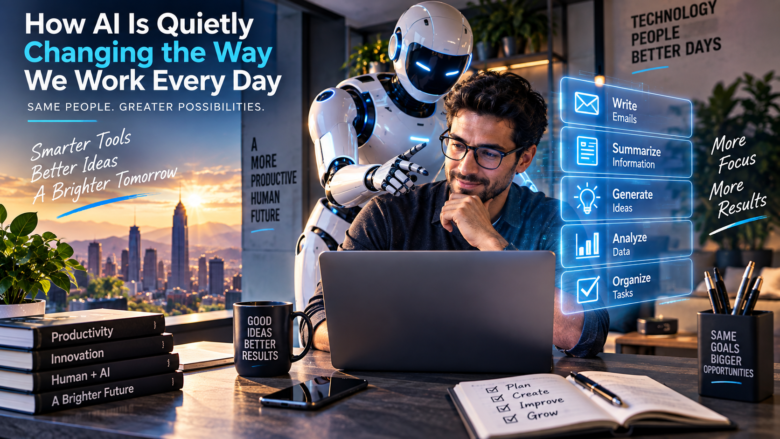
AI in everyday work is no longer something that belongs only to the future. It is already helping people write, organize information, generate ideas, and complete everyday tasks more efficiently.
Artificial intelligence is no longer something that belongs only to the future. It is already becoming part of everyday work, often in ways we barely notice. From writing emails and organizing schedules to analyzing information and generating new ideas, AI tools are changing how people complete ordinary tasks.
What makes this transformation especially interesting is that AI is not simply replacing traditional tools. In many cases, it is becoming a digital assistant that helps people work faster, reduce repetitive tasks, and focus more attention on decisions that require creativity and human judgment.
Small businesses, freelancers, students, office workers, and entrepreneurs can now access technologies that once seemed available only to large companies. A person working from home can use AI to summarize a long document, improve a presentation, organize information, brainstorm ideas, or create a first draft in just a few minutes.
However, using AI effectively is not simply about asking a chatbot to do everything. The real advantage comes from understanding which tasks AI can improve, where human judgment is still essential, and how to combine both intelligently.
AI Is Becoming an Everyday Work Assistant
One of the biggest changes happening in the workplace is surprisingly simple: people are beginning to delegate small repetitive tasks to AI.
Think about how much time can disappear during a normal working day. Writing routine messages, searching through documents, reorganizing notes, preparing summaries, comparing information, and creating first drafts can consume hours.
AI can help shorten many of these processes.
For example, instead of starting an email from an empty page, someone can provide the main points and ask an AI assistant to create a structured first draft. The person can then review it, correct the details, and adjust the tone before sending it.
The same principle can be applied to reports, meeting notes, project outlines, research summaries, and brainstorming sessions.
This does not eliminate the need for human involvement. In fact, reviewing AI-generated information is one of the most important parts of using these tools responsibly. AI can misunderstand context, omit important information, or occasionally produce incorrect statements.
The most productive approach is therefore not “AI instead of humans,” but rather AI helping humans complete certain tasks more efficiently.
Where AI Is Already Saving People Time
The impact of artificial intelligence becomes easier to understand when we look at ordinary activities rather than futuristic technology. Many of the most useful applications of AI are actually quite simple.
Writing and Communication
Writing is one of the areas where AI can save significant time. Professionals can use AI to prepare first drafts of emails, reports, proposals, descriptions, presentations, and internal documents.
Instead of spending twenty minutes trying to find the right way to begin a message, a user can provide the essential information and generate a starting point within seconds.
The important step comes afterward: reviewing the content and making it personal. Human editing helps ensure that the final message sounds natural, contains accurate information, and reflects the writer’s real intention.
Organizing Information
Modern work often involves dealing with large amounts of information. Documents, emails, meeting notes, spreadsheets, and online resources can quickly become overwhelming.
AI tools can help organize this information by identifying important points, creating summaries, grouping ideas, and transforming unstructured notes into clearer formats.
Imagine finishing a meeting with several pages of notes. Instead of manually reviewing every sentence, AI can help create a short summary containing the main decisions, unanswered questions, and tasks that need attention.
The result is not just faster work. It can also make information easier to understand and act upon.
Brainstorming and Developing Ideas
Another useful application is brainstorming.
People often lose time staring at an empty document because they know what they want to accomplish but are unsure where to begin. AI can generate possible directions, questions, examples, or structures that help overcome that initial barrier.
A small business owner, for example, could use AI to explore ideas for a promotion. A teacher might generate different approaches for explaining a difficult concept. A content creator could brainstorm several angles for an article before deciding which one deserves further research.
AI does not need to provide the final idea to be useful. Sometimes its greatest value is simply helping someone discover a direction they had not considered.
The Biggest Change May Be How We Make Decisions
Perhaps the most interesting effect of AI is not that it can generate text or summarize documents. It is that these tools can help people examine information before making decisions.
AI can assist in comparing alternatives, identifying patterns, organizing advantages and disadvantages, and highlighting questions that deserve further investigation.
But there is an important distinction.
AI can support a decision, but it should not automatically make important decisions for us.
Context, experience, responsibility, ethics, and common sense still matter. This becomes particularly important when decisions involve money, employment, health, legal issues, or other situations where incorrect information could have serious consequences.
The strongest approach is to treat AI as a tool for expanding our ability to analyze information—not as an unquestionable authority.
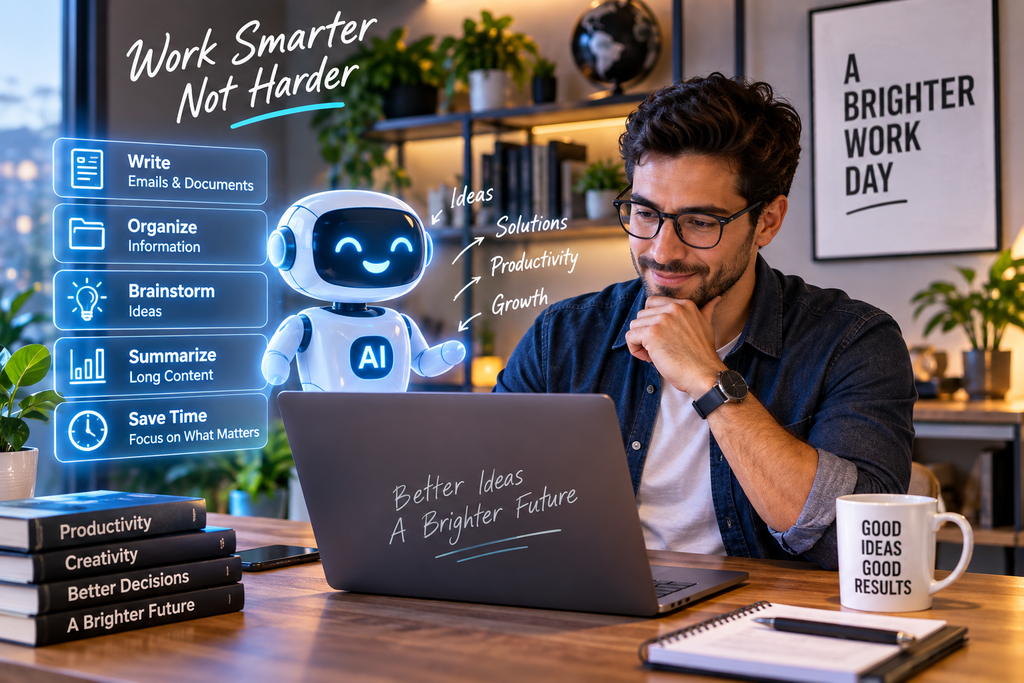
What AI Still Cannot Replace
With all the excitement surrounding artificial intelligence, it is easy to assume that the technology can handle almost everything. In reality, AI still has important limitations.
Human experience, empathy, responsibility, creativity, and understanding of complex situations remain extremely valuable. An AI system can generate suggestions based on information and patterns, but it does not experience the world in the same way a person does.
This difference becomes especially important when a situation requires understanding emotions, interpreting subtle context, negotiating with another person, or taking responsibility for a final decision.
Human Judgment Still Matters
Imagine using AI to prepare an important business proposal. The technology might help organize the document, improve the wording, and suggest additional ideas. But the person creating the proposal still understands the client, the relationship, the business objectives, and the consequences of making a particular promise.
That knowledge cannot simply be delegated.
The same applies to many professions. AI can assist a designer with concepts, help a programmer examine code, support a researcher in organizing information, or give an entrepreneur different perspectives on an idea.
In each case, however, the human remains responsible for evaluating the result.
A New Skill: Learning How to Work With AI
As artificial intelligence becomes more common, one of the most useful skills may be knowing how to communicate effectively with these systems.
A vague request usually produces a vague result.
Instead of asking AI to “write something about productivity,” for example, a person could explain the audience, objective, desired length, important points, and tone. Providing context makes it easier for the system to generate something genuinely useful.
There is another skill that is equally important: knowing when not to trust the first answer.
Useful AI habits include checking important facts, comparing information with reliable sources, protecting private or confidential data, and reviewing generated material before using or publishing it.
These habits can make the difference between simply using AI and using it responsibly.
Small Changes Can Create Significant Results
People do not necessarily need to transform their entire workflow to benefit from artificial intelligence. AI in everyday work can make these small improvements easier to achieve without completely changing the way people already work.
A better approach can be to identify one repetitive activity that consumes unnecessary time and experiment with using AI to improve it.
Perhaps it is summarizing meeting notes. Maybe it is creating an outline before writing a report. It could be organizing ideas at the beginning of a project or turning a complicated explanation into simpler language.
Saving ten or fifteen minutes on one task might not seem revolutionary. But when that improvement happens repeatedly throughout the week, the accumulated time becomes significant.
That is one reason AI adoption can happen quietly. There does not need to be one dramatic moment when everything changes. Instead, dozens of small improvements gradually reshape the way people work.
The Future of Work Will Be More Collaborative
The future of artificial intelligence at work is unlikely to be defined by humans doing nothing while machines perform every task. A more realistic possibility is a workplace where people and AI systems increasingly work together.
AI may handle repetitive processes, organize large amounts of information, generate preliminary ideas, and help people move faster through routine work. Humans can then dedicate more attention to creativity, relationships, strategy, problem-solving, and decisions that require experience and judgment.
This combination could be particularly valuable for small businesses and independent professionals. A person who once needed several different resources to research ideas, prepare documents, organize projects, and develop content can now receive assistance with many of these activities from a single AI-powered tool.
Productivity Is Not Just About Doing More
There is also an important point that is sometimes forgotten when discussing artificial intelligence: productivity should not simply mean producing more work.
Technology is most valuable when it helps people use their time more intelligently.
If AI allows someone to finish a repetitive task faster, that extra time could be used to improve the quality of a project, learn a new skill, communicate with customers, develop a new idea, or simply reduce unnecessary workload.
The goal should not be to fill every minute saved by technology with another task. Instead, AI can help create more room for the activities where human attention provides the greatest value.
Final Thoughts
Artificial intelligence is already changing everyday work, but much of that transformation is happening quietly.
AI in everyday work is becoming more useful as these tools become easier to access and integrate into daily routines.
The biggest improvements are often not spectacular. They are practical: a faster first draft, a clearer summary, better-organized information, a new idea when creativity feels stuck, or several minutes saved on a repetitive activity.
At the same time, AI works best when people remain involved. Generated information should be reviewed, important facts should be verified, and human judgment should remain central to meaningful decisions.
The people who benefit most from this technology may not necessarily be those who use the largest number of AI tools. They may simply be the ones who learn where AI genuinely saves time and where human thinking still matters most.
As these tools continue to evolve, learning how to work alongside artificial intelligence could become as ordinary as learning to use email, search engines, or smartphones once was.
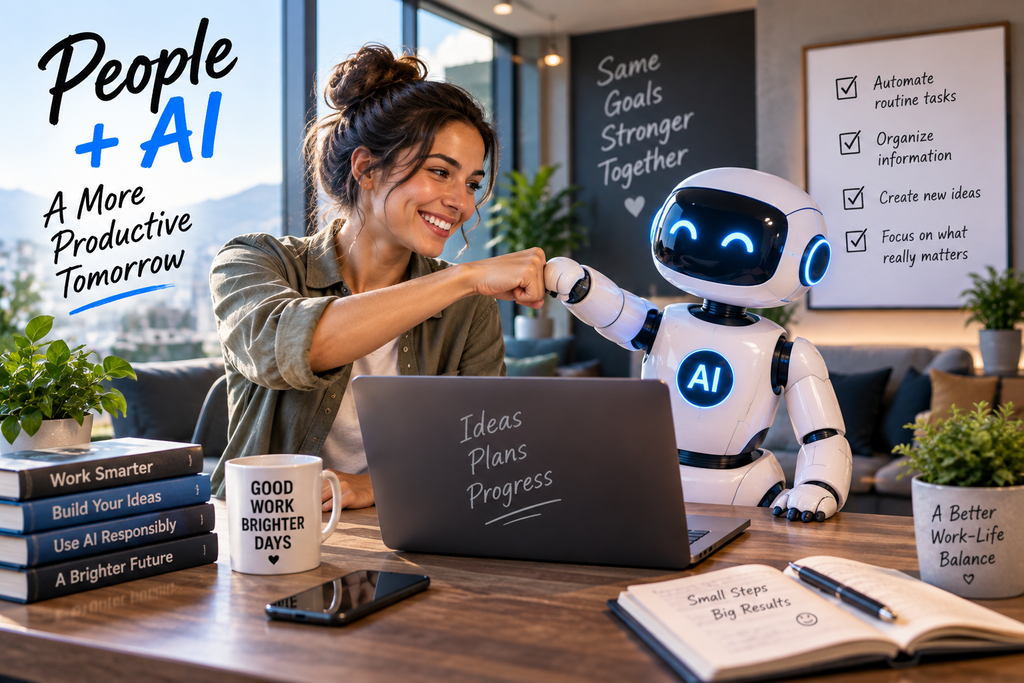
How AI in Everyday Work Can Improve Productivity
AI in everyday work can improve productivity by reducing the time spent on repetitive tasks. From organizing information and preparing first drafts to generating ideas, AI can give people more time to focus on creative thinking, important decisions, and meaningful work.